The Unseen Value of Life Insurance
This past Monday, I had the opportunity to attend a Zoom training session with Ms. Jenni Bui, National Managing Director of IAA. She asked a question that sounded very simple, yet it made me think deeply: “What is insurance?”
At first, it seems like an easy question. But the more I thought about it, the more abstract and meaningful it became. Insurance, in essence, is the transfer and sharing of risk.
When people hear the word insurance, most immediately think of:
- Auto insurance
- Home insurance
- Health insurance
Why is that? Because not having them comes with penalties. Without auto insurance, your driver’s license can be suspended by the DMV, affecting your ability to work. Without home insurance, banks will not approve a mortgage loan. Without health insurance, you may face government penalties.
Because of this, many people purchase these types of insurance not because they fully understand their value, but because they feel they have to. No matter the cost, they buy them just to make sure they are covered.
Life insurance, however, is viewed very differently. Many people think: “It’s okay to have it, but it’s also okay not to.” And because of that mindset, people rarely stop to ask: How important is life insurance really in our lives?
Perhaps it’s because life insurance focuses on the long-term future—things that haven’t happened yet. As humans, we tend to focus on the present and take care of what feels urgent now. But when we look more closely, life insurance is not just about “what if something happens.” It can also provide:
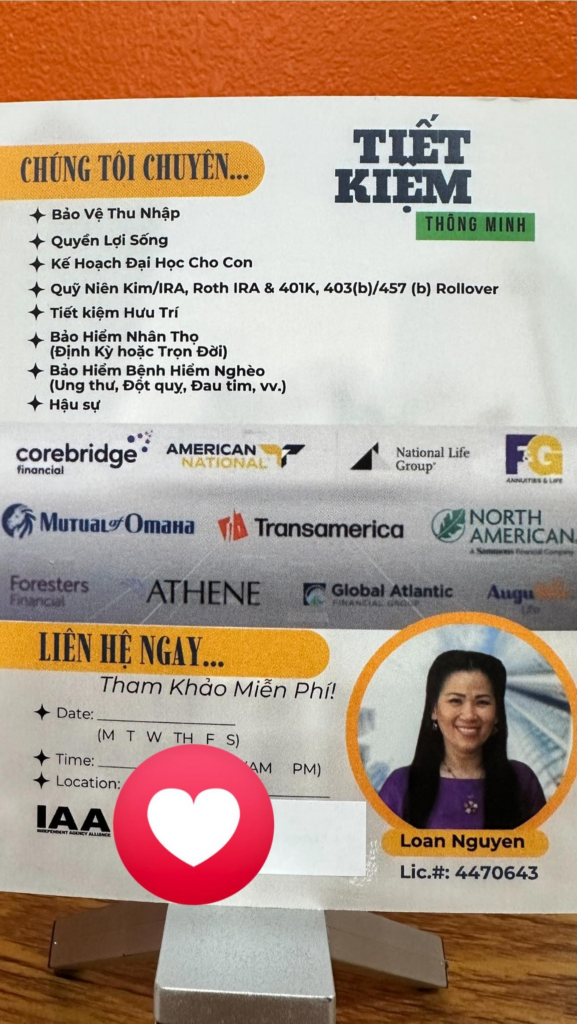
- Income protection
- Living benefits
- College planning for children
- Retirement planning and annuities
- Rollovers from IRA, Roth IRA, or 401(k)
- Tax-free retirement strategies
- Critical illness protection (cancer, stroke, or heart attack)
- Final expense planning
Life insurance comes in many forms—Term life, Whole life, and IUL (Indexed Universal Life)—each serving a different purpose at different stages of life.
Unfortunately, because it focuses on the future, many people feel it isn’t urgent or important, and they end up overlooking it. That training session urged me to pass this message to you from a different perspective: Not as something we buy because we are forced to, but as a way to prepare for ourselves and for the people we love.